Contents
Have you noticed that your hair just doesn't seem to behave the way it used to? Perhaps it's becoming thinner, drier or frizzier, your natural texture has changed, or the products and styling techniques you've relied on for years no longer give you the same results.
For many women, these changes begin during perimenopause and menopause, often alongside other changes that can make their hair feel unfamiliar. You might notice a wider parting, less volume when you tie your hair back, more strands in the shower or hair that suddenly feels difficult to manage. And while hormonal changes may play a part, there's often more to the story than oestrogen alone.
In this blog, I'll explore why hair can change during perimenopause and menopause, why it may become thinner or change texture, whether it can improve, and when it's worth seeking specialist advice. I'm Ruth Collis AIT, Consultant Trichologist, based in Haywards Heath, West Sussex, and these are questions I regularly hear in clinic.
Why does hair become thinner during perimenopause and menopause?
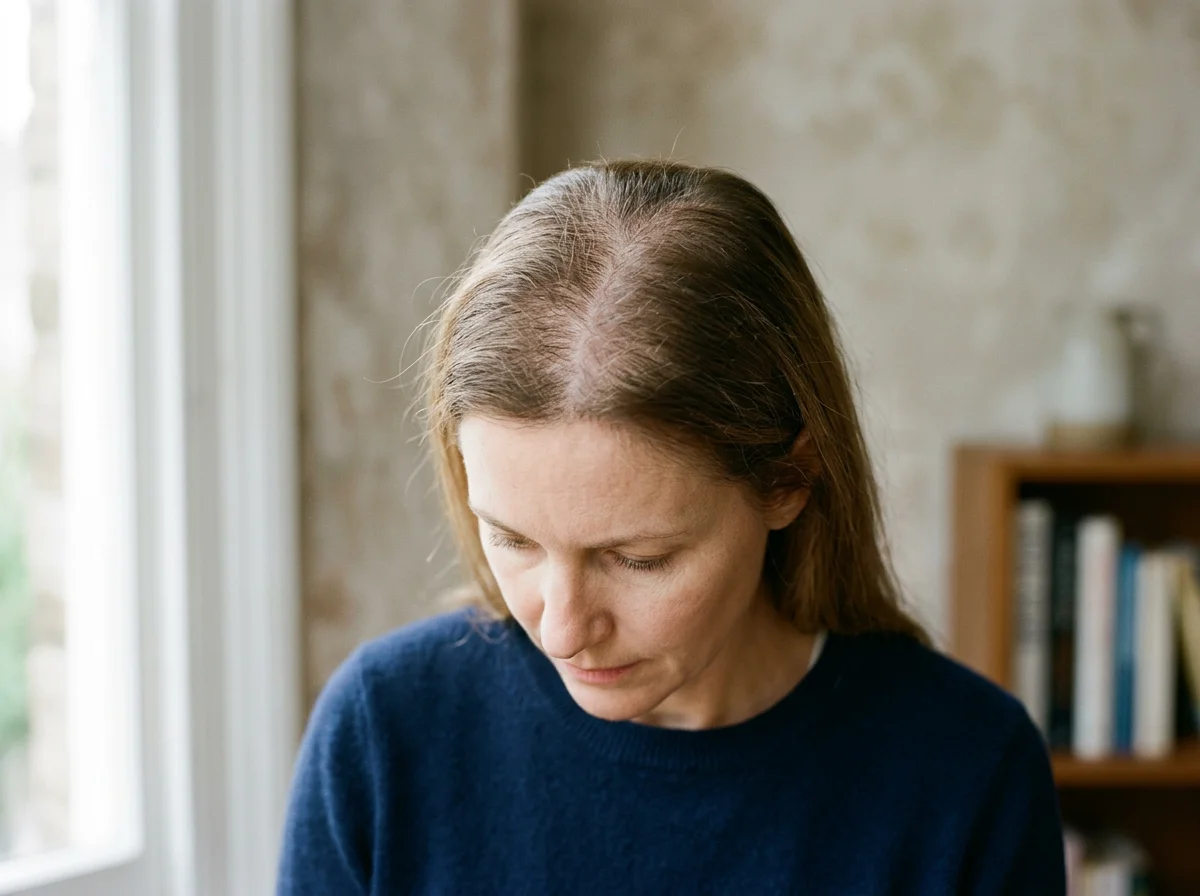
Hair growth is influenced by genetics, hormones, age and general health. Around menopause, changes in oestrogen and the relative influence of androgens may affect the hair growth cycle. Some women notice gradual thinning across the top of the scalp or a widening parting, while others experience increased shedding.
One possible explanation is female pattern hair loss, in which susceptible follicles gradually produce finer, shorter hairs. This process is known as miniaturisation. It can become more noticeable with age, but menopause itself doesn't explain every case, and not every woman with thinning hair has female pattern hair loss.
Other women experience telogen effluvium, a form of increased hair shedding that can follow physiological stress, illness, medication changes or other triggers. Some women have more than one type of hair loss at the same time. The pattern of thinning, the timing and the scalp findings all matter when working out what is happening.
Why is my hair texture changing during menopause?
One of the things women often tell me is that 'my hair doesn't feel like my hair anymore'. It may feel rougher, drier or frizzier, develop a wave that wasn't obvious before, or seem impossible to style. Even a familiar haircut can suddenly sit differently.
Women do report changes in hair texture, thickness and manageability during perimenopause and menopause. Changes in hair-shaft diameter, density, hair care, chemical processing and natural ageing may all affect how hair looks and behaves. Hormones may contribute, but we cannot assume that every new curl, dry patch or change in texture is directly caused by falling oestrogen.
Density can change the way hair behaves, too. When individual strands become finer or there is less overall volume, hair may no longer fall or hold its shape in the way you're used to. If your menopause has been brought on by medical treatment, including chemotherapy or certain hormone treatments, the changes can feel especially abrupt. Understanding whether the issue is the hair shaft, the scalp, shedding or progressive thinning helps guide what to do next.


Why is my hair thinning when my blood tests are normal?
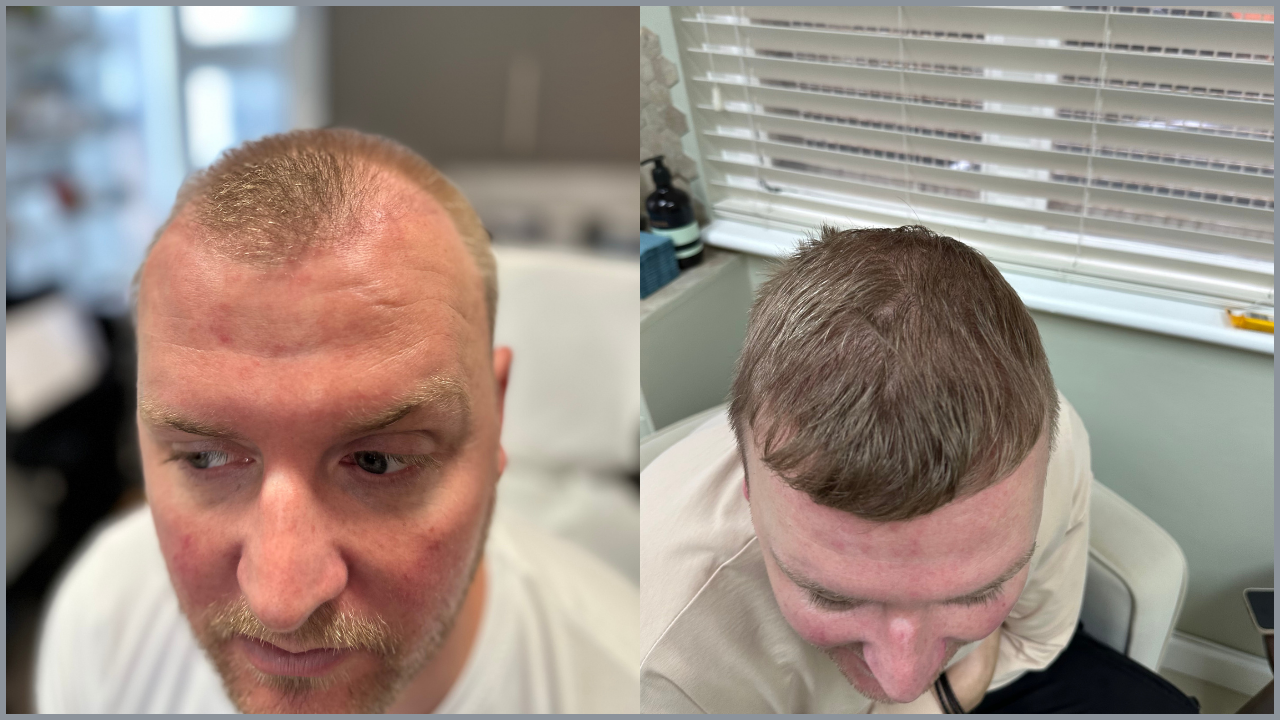
I often meet women who have already had blood tests and been told that everything looks normal, yet their hair is still changing. That can be frustrating, especially when you can clearly see a difference. Normal blood tests don't necessarily explain why your hair is thinning — but they also don't automatically mean something has been missed.
Blood tests are valuable when there is a clinical reason to check for factors such as iron deficiency or thyroid dysfunction. However, not all hair loss is caused by a blood-test abnormality. Female pattern hair loss, for example, may occur even when routine results are within the reference ranges.
A fuller assessment looks at your medical history, medications, diet, family history, the pattern and duration of hair changes, and the condition of your scalp. Where additional tests are appropriate, these should be selected according to your symptoms and clinical findings rather than ordered indiscriminately. The aim is to understand the whole picture, not simply to find a number outside a laboratory range.
Will my hair grow back after menopause?
It depends on the reason for the change. If you're experiencing a temporary episode of shedding, hair density may improve as the trigger resolves, although regrowth takes time. If you have female pattern hair loss, the condition is usually progressive, but treatments may help maintain or improve density for some women.
Hair texture changes are also variable. Some women find that adjusting their hair-care routine helps them manage dryness or frizz, while others need an assessment to establish whether breakage, scalp inflammation or a hair-loss condition is contributing.
I don't think it's helpful to promise that hair will always return to how it was before menopause. Equally, I wouldn't want you to assume that nothing can be done. The earlier we understand what is happening, the sooner we can discuss realistic options based on your particular findings.
When should I see a trichologist about menopausal hair changes?
You don't need to wait until your hair loss feels severe. If your parting is widening, your ponytail feels noticeably smaller, you're shedding more than usual, or your hair and scalp have changed in a way that concerns you, it's reasonable to ask for an assessment.
During a consultation, I'm not simply looking at how much hair you've lost. We look at what has changed, when it began and what may be contributing. Your medical and hormonal history, family history, medications and lifestyle all provide context, alongside a detailed hair and scalp examination, including trichoscopy. If further investigation is indicated, I can explain why and help you understand the next steps.
You don't need to arrive knowing what's wrong with your hair. Working out what may be happening, and which options are appropriate, is exactly what a trichology consultation is for. You can book directly without a GP referral, although some findings may need medical assessment or referral.
Frequently Asked Questions
Is menopausal hair loss permanent?
Not necessarily. The outlook depends on the diagnosis. Some forms of shedding can improve, while female pattern hair loss tends to be ongoing and may benefit from treatment to manage progression. An assessment can help distinguish between them.
Can HRT help with hair loss during menopause?
Some women notice changes in their hair while taking HRT, but evidence that HRT reliably improves hair density is limited. Decisions about HRT should be based on your overall menopausal symptoms, medical history and individual risks, in discussion with your prescribing clinician. If shedding starts after a medication change, mention it to them rather than stopping treatment without advice.
Why has my hair suddenly become frizzy or curly during menopause?
Hair may appear frizzier or develop a different wave pattern as strand thickness, density, damage and manageability change. Some women notice this around menopause, but the exact cause isn't always hormonal. If the change is sudden or comes with increased shedding or scalp symptoms, it's worth looking more closely.
Why is more hair falling out in the shower?
Some daily shedding is normal, and washing can make loose hairs more noticeable. If the amount has increased substantially, persists or is accompanied by visible thinning, don't assume it's simply menopause. The timing and pattern can help identify whether you're experiencing increased shedding or another condition.
Do hair supplements help menopausal hair loss?
Supplements may be useful where there is a confirmed deficiency or a specific nutritional need, but taking extra vitamins doesn't automatically improve hair growth. Excessive amounts of some nutrients can be harmful. It's better to assess your diet and relevant clinical findings before deciding whether supplementation is appropriate.
Can hair become thicker again after menopause?
Some women can regain density following temporary shedding, while others may see improvement or stabilisation with treatment for an identified hair-loss condition. Results vary, and it's important to set expectations according to the diagnosis rather than menopause alone.
Understanding what is happening to your hair
If your hair has changed during perimenopause or menopause, I understand how unsettling it can be — particularly when you've spent years knowing exactly how to look after it. You deserve an explanation that goes beyond 'it's just your hormones'.
My approach is to look at you as a whole person, explore the possible contributors and help you understand what can realistically be done. If you'd like to investigate changes in your hair or scalp, you can book a consultation at Ruth Collis Trichology in Haywards Heath, West Sussex.
Booking: ruthcollistrichology.co.uk/appointment
About the author: Ruth Collis AIT is a Consultant Trichologist and PRP Specialist based in Haywards Heath, West Sussex. She supports people experiencing hair loss and scalp concerns, including changes around perimenopause and menopause.
