Why Is My Hair Falling Out? The Most Common Causes Explained by a Trichologist
Contents
If you’ve noticed more hair than usual falling out onto your pillow, tangled in your brush, or collecting in the shower drain, I want you to know that you’re not imagining it, and you’re not alone. Finding excessive hair shedding is one of the most quietly distressing things a person can experience, often without feeling able to talk about it.
Today I want to address exactly that: why hair falls out, what might be happening beneath the surface, and when it’s time to stop searching for answers online and get a professional hair loss assessment.
I’m Ruth Collis, Consultant Trichologist & Specialist in PRP for Hair Loss, based in Haywards Heath, West Sussex, and this is one of the questions I’m asked most often. So let’s work through it together.

How much hair loss is actually normal?
Here’s the truth that most hair loss articles won’t tell you: normal hair shedding is different for everyone.
You’ll see the same statistic quoted on almost every website, “50 to 100 hairs a day”, but fixating on a number can quickly turn into analysing and counting every single hair in your brush, on your pillow, or in the shower. That’s not where I want your focus to be.
What matters far more is knowing your normal hair shedding pattern and recognising when something has changed from it.
Think of it the way we think about health in medicine. Illness isn’t always about hitting a specific number on a chart. It’s about a shift from your normal. Your hair is no different.
The signs worth paying attention to are:
Your hair shedding is noticeably heavier than it used to be, not compared to someone else’s, but compared to yours.
Your parting looks wider than it did six months ago.
Your ponytail feels thinner or has less volume at the band.
Your scalp is becoming more visible, catching the sun in places it didn’t used to and getting burnt where your hair once provided protection.
Brushing or washing your hair brings away more hair than feels normal for you.
I’ve had patients come into clinic with bags of hair they’d collected, trying to justify what they were experiencing. I want to say this clearly: you don’t need to prove your hair loss.
If something has changed, that is enough of a reason to get it looked at. Trust what you know about your own body.
Why is my hair falling out all of a sudden? Understanding the hair growth cycle
Hair loss is rarely as straightforward as it seems, and one of the most important things I want you to understand is that what you’re seeing now may not reflect what happened to your body recently.
The hair growth cycle has its own biology, its own timing, and its own way of keeping you guessing. By the time hair shedding becomes visible, the original trigger may already be long behind you.
That disconnect between cause and effect is one of the main reasons hair loss is so frequently misunderstood, and why so many people spend months searching for an answer that isn’t obvious.
What can start as a temporary episode of excessive hair shedding doesn’t always resolve cleanly. For some people, it tips into something more prolonged. For others, repeated bouts have a compounding effect, not just on the shed itself, but on the wider health of the hair growth cycle over time, further accelerating hair loss.
Here’s something that rarely gets talked about: more than one hair loss condition can occur at the same time. One thing can quietly trigger or worsen another, and what looks like a single, explainable episode on the surface may have layers underneath it.
This complexity is exactly why a professional hair loss assessment matters, not because your situation is necessarily complicated, but because it may be, and you deserve to know either way.
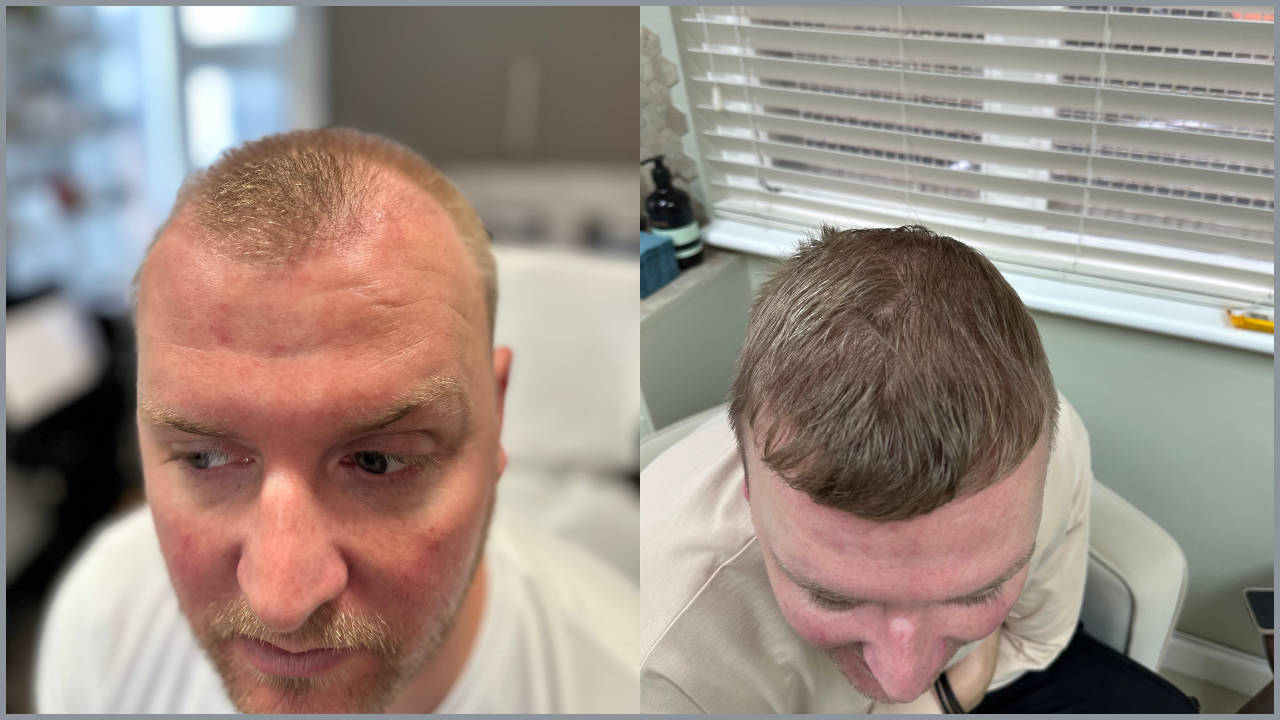


Women and hair loss: why it’s rarely just one thing
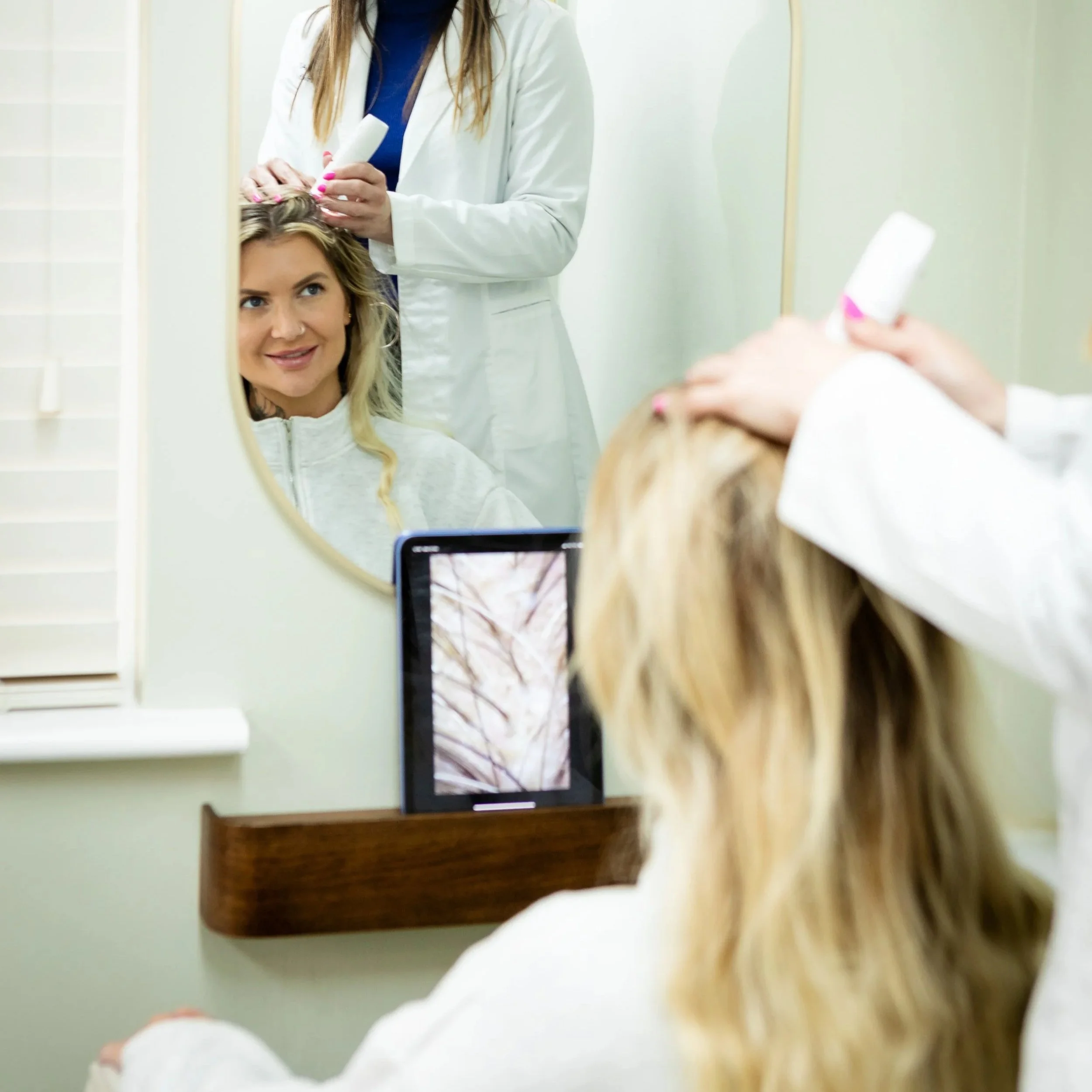
Hair loss in women is one of the most underdiagnosed and emotionally isolating experiences I encounter in clinic. It tends to be dismissed, minimised, or attributed to the obvious, stress, hormones, or “just getting older”, when the reality is almost always more nuanced than that.
Hormonal changes and hair loss are closely linked for many women, and these changes can occur at many different stages of life. But the important thing to understand is that a hormonal change rarely causes just one thing in isolation. It can set off a chain of events within the hair growth cycle that takes months or even years to reveal itself fully, and it can unmask or accelerate other types of female hair loss that were quietly developing in the background.
Postpartum hair loss is a good example of this. Many women experience shedding after having a baby and are reassured that it will pass. Sometimes it does.
But when postpartum hair shedding is prolonged, heavier than expected, or simply doesn’t resolve, that can be a sign that something else is happening beneath the surface. The hormonal changes associated with pregnancy and the months that follow are significant, but they don’t always tell the whole story.
I’ve seen patients who assumed their hair loss was “just postpartum shedding”, only to discover there were additional factors influencing the health of their hair cycle. By the time they sought help, often after finishing breastfeeding, sometimes a year or two after giving birth, the picture had become considerably more complex.
A hormonal shift is never just a hormonal shift.
If your hair loss is lasting longer than expected, or it simply doesn’t feel right, please don’t wait.
Why is my hair falling out as a teenager?
Adolescence and puberty bring enormous change, physically, hormonally, and emotionally, and the hair is not immune to any of it. Hair loss in teenagers is more common than most families realise, and it can be particularly distressing at an age when confidence and self-image are already under pressure.
There are many reasons why a young person might begin losing hair, and they are rarely obvious from the outside. The body undergoes significant internal changes during these years, and the hair growth cycle responds to those changes in ways that can surprise even experienced clinicians.
There is often more going on than first appears, and the causes, while identifiable with the right assessment, are not always what you might expect.
What I will say clearly is this: teenage hair loss should never be ignored or put down to “just a phase”.
The earlier hair loss in young people is investigated properly, the better the outcome tends to be. If you’re a parent who has noticed changes in your teenager’s hair, or a young person reading this yourself, a professional hair loss assessment is always the right first step.
Why the internet can’t tell you how to stop hair loss
If you’ve been searching for solutions, and the chances are, if you’re reading this, you have. You’ll have come across no shortage of promises. Hair loss supplements, shampoos, oils, and an ever-growing list of natural hair loss remedies, all claiming to address hair loss.
I want to be honest with you about this, because I think it matters.
The supplement industry is largely unregulated. A product that appears natural is not automatically safe, and it is certainly not automatically appropriate for your specific situation.
Ingredients can vary significantly from batch to batch depending on their source. The studies behind many popular hair loss supplements are often far smaller and less robust than the marketing suggests. Some supplements interact with medications. Some are contraindicated in certain health conditions.
Some ingredients currently being promoted as natural alternatives for hair loss carry the same physiological effects as their pharmaceutical equivalents, without the regulatory oversight that helps ensure consistency and safety.
The difference with a regulated medicine is that it must be exactly the same from batch to batch, with a known and consistent dose. That cannot always be said for a supplement whose plant source varies by season, soil, and growing conditions.
This is not said to alarm you. It’s said because you deserve accurate information, not a product recommendation dressed up as advice.
The only thing that reliably helps with hair loss, regardless of the cause, is understanding what is actually driving it.
Everything else is guesswork.

When should you see a trichologist?
If you’re searching “why is my hair falling out?”, the answer you’re looking for is not on a product label.
A trichologist’s role is to identify the root cause of hair loss, not to sell you a solution before understanding what the problem is.
If you’re looking for professional support, it’s worth taking the time to consider a practitioner’s qualifications, training, clinical experience, patient reviews, and areas of special interest. Hair loss is a complex field, and not all practitioners have followed the same training pathway.
The Institute of Trichologists maintains a register of qualified practitioners, which can be a useful starting point if you’re looking for support closer to home. Google reviews can also provide valuable insight into a practitioner’s approach, communication style, and the experiences of previous patients.
I offer hair loss consultations in Haywards Heath, West Sussex, helping men and women experiencing hair loss, excessive shedding, scalp concerns, and unexplained changes in hair density. Patients regularly travel from across East Sussex, West Sussex, Surrey, Kent, London, and the wider South East for an assessment.
A first appointment includes a full scalp analysis, a detailed clinical history, and a clear explanation of what I believe is happening and what your options are. You’ll also receive a personalised written consultation summary, outlining my findings and recommendations, so you can refer back to the information in your own time.
Whether you choose to see another suitably qualified practitioner or me, the goal should always be the same: obtaining an accurate diagnosis and a clear understanding of what is driving your hair loss before investing time and money into treatments.
Everything is designed to help you understand what’s happening with your hair and scalp, without pressure and without guesswork.
If your hair is changing and you can’t explain why, that is reason enough to get it looked at.
The earlier you understand what’s driving your hair loss, the sooner you can make informed decisions about what to do next.
Frequently Asked Questions
Why is so much of my hair falling out?
A noticeable increase in hair shedding that is more than what is normal for you is usually a sign that something has shifted internally. The causes are wide-ranging and can include hormonal changes, nutritional factors, illness, stress, or conditions affecting the scalp and hair follicle.
The key is finding out which. A trichology assessment is the most direct route to that answer.
How do I stop my hair from falling out?
The honest answer is that it depends entirely on what is causing it.
There is no universal hair loss treatment, and applying the wrong solution can delay the right diagnosis. The most effective first step is always understanding the cause, which is what a consultation is designed to establish.
What are the big 3 for thinning hair?
This term is used widely online in relation to specific treatments, but it’s worth knowing that no combination of products is appropriate for every type of thinning hair.
What works for one cause may do nothing, or potentially worsen the situation, for another. Professional diagnosis first, treatment second.
Which vitamin reduces hair fall?
Nutritional deficiencies can absolutely contribute to hair loss, but supplementing without knowing whether a deficiency actually exists is not recommended.
Some supplements can interact with medications or cause unwanted effects at high doses. If you suspect a nutritional cause, the right step is a blood test and professional assessment, not a trip to the supplement aisle.
Why is my hair falling out of nowhere?
It rarely is truly “out of nowhere.”
The hair growth cycle means that what you’re seeing today was often set in motion weeks or even months earlier. A sudden, unexplained increase in shedding or thinning is one of the clearest reasons to seek a professional opinion sooner rather than later.
A note on this blog
I write these posts because I know how worrying it can be when your hair starts to change, and how difficult it can be to separate good information from clever marketing.
I aim to give you clear, honest, evidence-based guidance so you can make informed decisions about your hair health. Whether you’re experiencing increased shedding, thinning, or simply noticing something doesn’t feel quite right, you deserve answers that are tailored to you, not generic advice designed to sell a product.
If anything in this article has resonated with you, or you’re concerned about changes in your hair or scalp, my door is always open.
Ruth Collis AIT
Consultant Trichologist & Specialist in PRP for Hair Loss
Haywards Heath, West Sussex
