Hair Loss in Women: What Nobody Tells You
Contents
If you’ve been told your hair loss is “just stress,” “just hormones,” or “just part of getting older” — and somehow none of those explanations have actually made you feel better — you’re not the only one.
Hair loss in women is far more common than the silence around it would suggest, yet it’s rarely discussed openly, rarely taken seriously at a first GP appointment, and rarely explained in a way that actually helps.
Today, I want to talk about what isn’t said often enough: why hair loss looks different in women than it does in men, why so many women spend years searching for answers, and why — despite many of the myths you’ll read online — there is genuine reason for hope.
I’m Ruth Collis AIT, Consultant Trichologist and PRP Specialist, based in Haywards Heath, West Sussex, and this is a conversation I have with patients almost every single day. Throughout this guide, I’ll explain the most common causes of female hair loss, why so many women are misdiagnosed or dismissed, and what can be done to give your hair the best possible chance of recovery. I’ll keep everything in plain English, so whether you’ve only just noticed more hair in your brush or you’ve been struggling with thinning hair for years, you’ll come away with a much clearer understanding of what’s happening.
How common is this really?
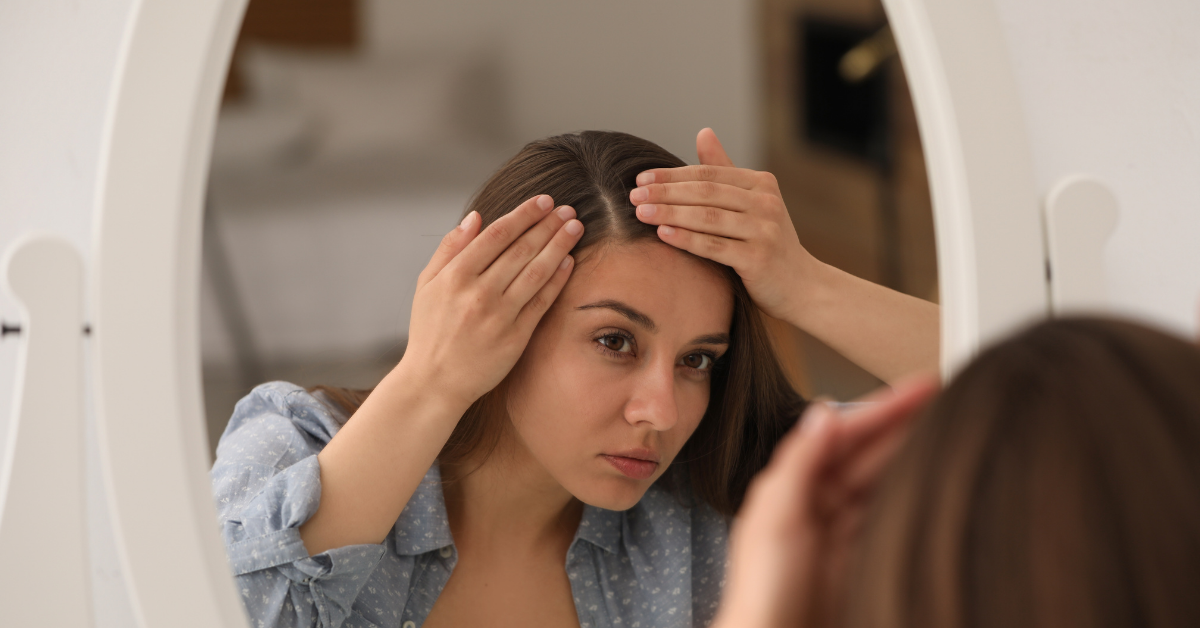
This is the part that surprises almost everyone: hair loss in women is far more common than most people realise. Around 40% of women will experience some degree of visible hair loss by the age of 50, and for many, the first signs begin much earlier. Yet despite how common it is, it still isn’t something women talk openly about.
Part of the problem is that female hair loss rarely looks dramatic. It usually develops so gradually that other people don’t notice it at first. Instead of obvious bald patches, you may find your parting becoming wider, your ponytail feeling thinner, or your hair simply losing the volume and density it once had. These subtle changes are easy for everyone else to overlook, but not for the person living with them every day.
That’s why so many women begin to doubt themselves. Friends and family often say, “I can’t see anything,” or “Your hair looks fine.” Even healthcare professionals may reassure you that it’s “just stress” or “just part of getting older.” But hair loss isn’t measured by whether someone else notices it. It’s measured by a change from what is normal for you.
One of the things nobody tells you is that women almost always notice the changes months before anyone else does. You wash your hair, brush it, style it, and see it every day. You know how thick your ponytail used to feel. You know where your parting used to sit. You notice more hairs in the shower long before anyone comments on your appearance.
And that’s exactly why I encourage women to trust their instincts. You don’t need to wait until your hair loss is obvious to everyone else before asking questions. In fact, recognising those early changes and seeking the right advice sooner rather than later often gives you the greatest number of options moving forward.
“It’s just stress,” “it’s just hormones,” “it’s just menopause” —and why none of these are wrong, but none of them are the whole story
One of the biggest misconceptions about hair loss in women is that there’s usually one single cause. It’s understandable why so many women are given simple explanations such as stress, hormones, menopause, or ageing. Each of these can genuinely play a role in hair loss.
The problem isn’t that these explanations are wrong.
It’s that they’re often incomplete.
One of the things nobody tells you is that female hair loss is frequently multifactorial. In other words, there may be several different factors contributing to the changes you’re seeing, all happening at the same time. Focusing on just one of them, while the others continue quietly in the background, can leave you feeling frustrated when your hair doesn’t respond as you’d hoped.
This is something I see regularly in clinic. Many women arrive convinced they’ve already worked out the answer. Some believe it’s entirely hormonal. Others are certain it’s stress. Some have spent months researching female pattern hair loss online and assume they’ve diagnosed themselves correctly.
Sometimes they’re right.
But very often, they’re only seeing one piece of a much bigger picture.
That’s why a thorough consultation isn’t simply about putting a label on your hair loss. It’s about understanding everything that could be influencing it. Your medical history, your lifestyle, your diet, your scalp health, your medications, your family history, and any recent changes all provide important pieces of information. Looking at those factors together often reveals a very different picture from the one you expected.
And that’s why I would always encourage women to be cautious of anyone who promises a quick answer after asking only a handful of questions. Hair loss is rarely that straightforward. Taking the time to understand the whole picture is often the difference between trying treatment after treatment and having a plan that’s genuinely tailored to you.


What nobody tells you about getting a diagnosis
One of the hardest parts of losing your hair isn’t the shedding itself.
It’s not knowing why it’s happening.
By the time many women come to see me, they’ve often already visited their GP. Some have had blood tests, some have been reassured that everything is “normal”, and others have simply been told to keep an eye on it. It’s understandable why this happens. Hair loss is a highly specialised area, and with so many different conditions and possible contributing factors, it isn’t always straightforward to identify what’s going on during a routine appointment.
One of the things nobody tells you is that hair loss is a symptom, not a diagnosis.
A widening parting, increased shedding, or a thinner ponytail doesn’t tell us what’s causing the problem. Those changes could be linked to several different conditions, and sometimes more than one at the same time. That’s why understanding your individual situation is so important before deciding what to do next.
Sometimes blood tests are appropriate. Sometimes they’re not. Sometimes previous blood tests need interpreting in the context of your symptoms, rather than simply whether the result falls inside a laboratory reference range. Every person’s situation is different, which is why there isn’t a single checklist that works for everyone.
Unfortunately, when answers don’t come quickly, many women do what almost all of us would do: they start searching online, buying supplements, trying new shampoos, changing their diet, or ordering products that promise thicker hair. By the time they reach my clinic, it’s not unusual for someone to have spent hundreds of pounds trying to solve a problem they still don’t fully understand.
That’s why I believe the most valuable part of a consultation isn’t simply recommending a treatment. It’s taking the time to understand the whole picture. Once you understand why your hair has changed, you can make informed decisions about what, if anything, needs to happen next. That approach is often simpler, more cost-effective, and far less overwhelming than trying one product after another in the hope that something eventually works.
The good news nobody tells you about female pattern hair loss
If there’s one thing I hope you take away from this article, it’s this:
Hair loss in women is not something you should simply accept.
One of the biggest misconceptions is that once your hair starts thinning, nothing can be done. Thankfully, that simply isn’t true.
Even in female pattern hair loss, where genetics play an important role, the situation is rarely as hopeless as many women have been led to believe. Unlike men, women very rarely progress to complete baldness. Although the hair follicles gradually become smaller and produce finer hairs over time, there is often still hair present, which means there is frequently an opportunity to protect what you have and, in many cases, improve the quality and density of the hair that’s still growing.
One of the things nobody tells you is that timing matters.
The earlier changes are recognised, the more options are usually available. A widening parting, increased shedding, a smaller ponytail, or seeing more of your scalp under bright lighting may seem like small changes, but they can be the earliest signs that your hair is asking for attention. Acting early doesn’t necessarily mean starting treatment immediately. It means understanding what’s happening before those changes have had years to progress.
This is also why I always look at the whole picture, rather than focusing only on the hair itself. Hair is one of the most metabolically active structures in the body, and it’s often influenced by far more than genetics alone. Understanding whether there are additional factors contributing to your hair loss allows any treatment plan to be tailored to you, rather than relying on a one-size-fits-all approach.
Perhaps the most reassuring thing nobody tells you is that asking for help early isn’t an overreaction. It’s often the single biggest factor in achieving the best possible outcome. Whether your hair loss is temporary, permanent, or a combination of several conditions, having a clear diagnosis allows you to move forward with confidence instead of uncertainty.
When to see a trichologist
If you’ve read this far and found yourself thinking, “That sounds like me,” don’t ignore it.
You don’t need to wait until your hair loss becomes obvious to everyone else, and you certainly don’t need to have exhausted every shampoo, supplement, or treatment before seeking specialist advice.
One of the things nobody tells you is that early reassurance can be just as valuable as early treatment. Sometimes, the outcome is confirming that your hair is likely to recover naturally. Other times, it’s identifying an underlying cause before it has the opportunity to progress. Either way, understanding what’s happening allows you to move forward with confidence rather than uncertainty.
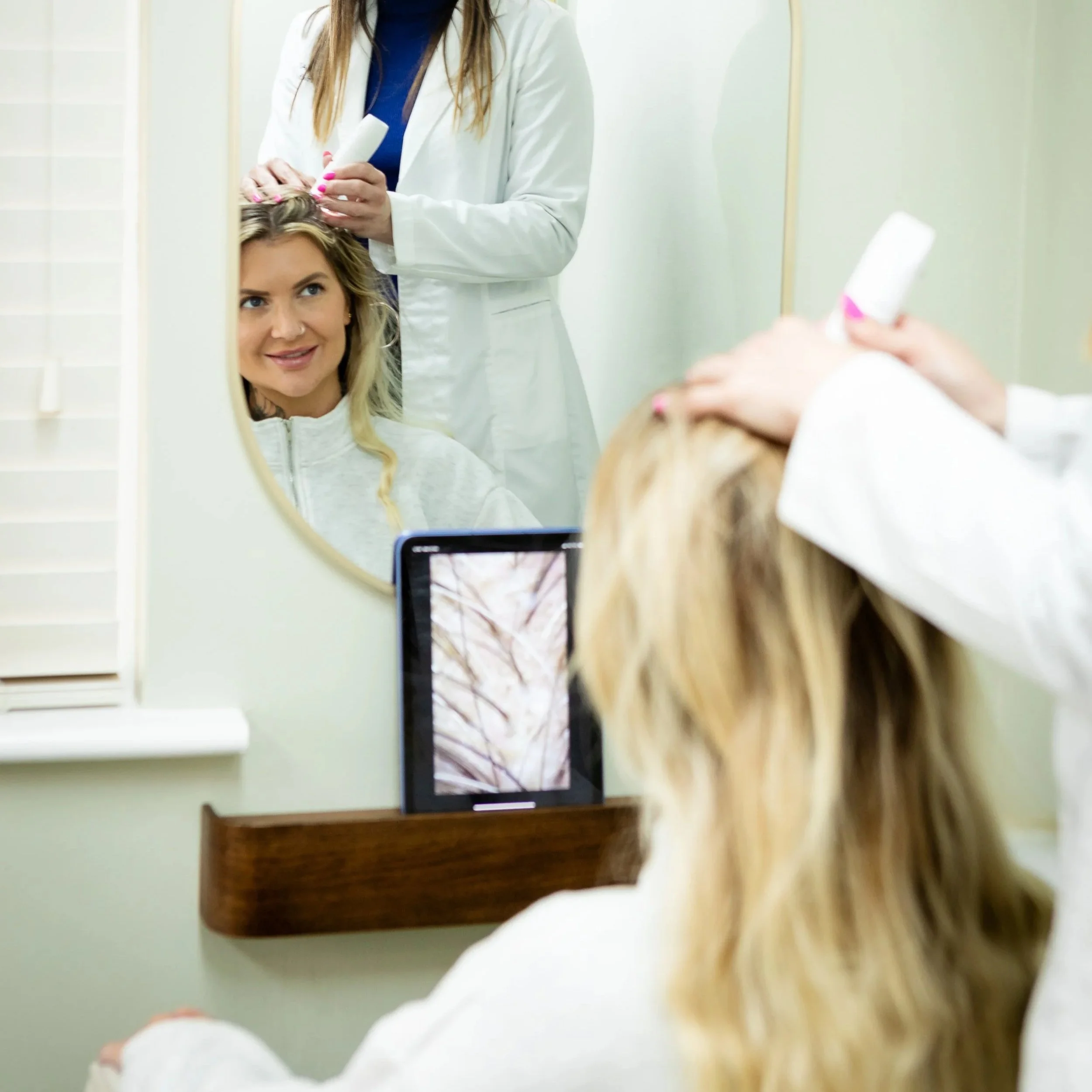
During a consultation, I take the time to understand the whole picture. We’ll discuss your medical history, lifestyle, recent changes, and any factors that could be contributing to your hair loss. I’ll also examine your scalp and hair using specialist equipment before explaining my findings in clear, straightforward language, so you understand not only what is happening, but why.
Whether your hair loss has only just started or you’ve been searching for answers for years, you don’t have to work it out on your own.
I offer consultations from my clinic in Haywards Heath, supporting patients from across Mid Sussex, West Sussex, and the surrounding areas.
The earlier you seek advice, the more options you’re likely to have.
Frequently Asked Questions
Is hair loss in women a normal part of ageing?
Some increase in hair shedding can happen throughout life, particularly during hormonal changes such as pregnancy, perimenopause, and menopause. However, a noticeable change in your hair’s thickness, density, or the amount you’re shedding shouldn’t automatically be dismissed as “normal ageing”. Hair loss is a symptom, and understanding why it’s happening is far more important than simply accepting it as inevitable.
Why is my hair thinning if my blood tests are normal?
Blood tests are only one piece of the puzzle. Hair loss is often influenced by several factors occurring at the same time, and standard blood tests don’t always provide the complete picture. Looking at your medical history, lifestyle, scalp health, medications, family history, and recent changes can be just as important as reviewing laboratory results.
Should I see a GP or a trichologist for hair loss?
Your GP is often the right place to start, particularly if your hair loss is associated with other medical symptoms or you feel generally unwell. A trichologist specialises in hair and scalp disorders and can provide a more detailed assessment when hair loss persists, you’re unsure of the cause, or you would like a comprehensive evaluation of the factors that may be contributing to your hair loss.
Can female hair loss improve?
Many types of female hair loss can improve, particularly when they’re identified early and the underlying contributing factors are addressed. The outlook depends on the type of hair loss you have and how long it’s been present, which is why obtaining the correct diagnosis is such an important first step.
When should I seek help for hair loss?
If you’ve noticed a widening parting, increased shedding, a smaller ponytail, or your hair simply doesn’t feel as thick as it used to, it’s worth seeking advice. You don’t need to wait until your hair loss becomes severe. In many cases, recognising changes early gives you more options and a better opportunity to protect the hair you have.
A note on this blog
I write these articles because I know how frightening hair loss can be, and because I want women to feel heard, informed, and reassured. If there’s one thing I hope you take away from this blog, it’s that you don’t have to simply accept changes in your hair without understanding why they’re happening.
Every woman’s experience is different, and that’s exactly why there’s no substitute for taking the time to look at the whole picture.
If anything you’ve read here has resonated with you, I hope it’s given you reassurance that you’re not alone, and that there are often more options available than you might think.
Ruth Collis AIT
Consultant Trichologist & Specialist in PRP for Hair Loss
Haywards Heath, West Sussex
