Contents
If you've just been told you need chemotherapy, hair loss is probably one of the first things that came to mind. For many people it's one of the most distressing parts of the whole experience — not because hair matters more than health, but because it's visible, it's sudden, and nobody really prepares you for what it's actually like.
As a trichologist who has been through chemotherapy myself, I want to give you the honest, practical information I wished I'd had. In this blog I'm going to walk you through what actually happens to your hair during chemo, debunk some of the myths that are still doing the rounds, and explain what you can do — before, during and after treatment — to give your hair the best possible chance of recovery.
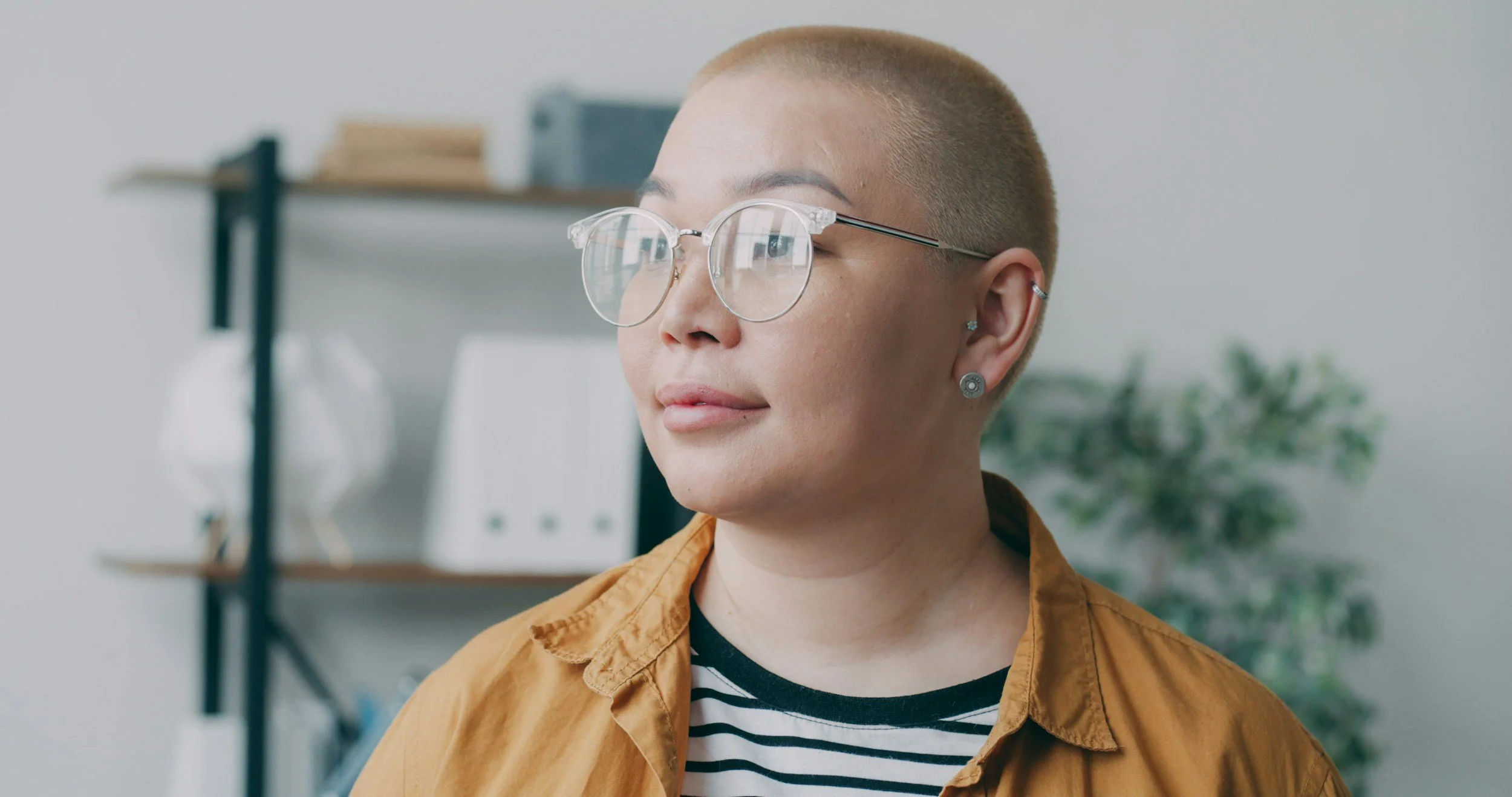
Why does chemotherapy cause hair loss?
Chemotherapy works by targeting rapidly dividing cells — which is why it's effective against cancer. But hair follicle cells are also among the fastest-dividing cells in the body, which makes them vulnerable to the same attack. The drugs don't distinguish between cancer cells and hair cells; they affect both.
What this means in practice is that the follicle is essentially forced into a sudden stop. Hair that was actively growing is shed, and new growth is halted until the body has cleared the treatment. For many people the follicle remains intact and hair does return after treatment. But this isn't guaranteed — and the type of chemotherapy you receive matters significantly. Some drugs, particularly taxanes, carry a higher risk of permanent chemotherapy-induced alopecia, especially without scalp cooling. This is something worth understanding before treatment begins, not after.
Does all chemotherapy cause hair loss?
No — and this is one of the most common misconceptions. Hair loss depends largely on which drugs are used, at what dose, and how they're administered. Some chemotherapy regimens cause complete hair loss within weeks. Others cause significant thinning. And some cause very little hair loss at all.
The drugs most strongly associated with hair loss include anthracyclines and taxanes — the latter carrying a particularly high risk of permanent loss if scalp cooling isn't used. Other regimens, such as some hormonal therapies or targeted treatments, may cause more subtle changes: a shift in texture, increased shedding, or a gradual thinning that's easy to dismiss as something else.
If you're about to start treatment and haven't yet had a conversation about what to expect for your hair specifically — based on your drugs, your dose, and your options — that conversation is worth having now.
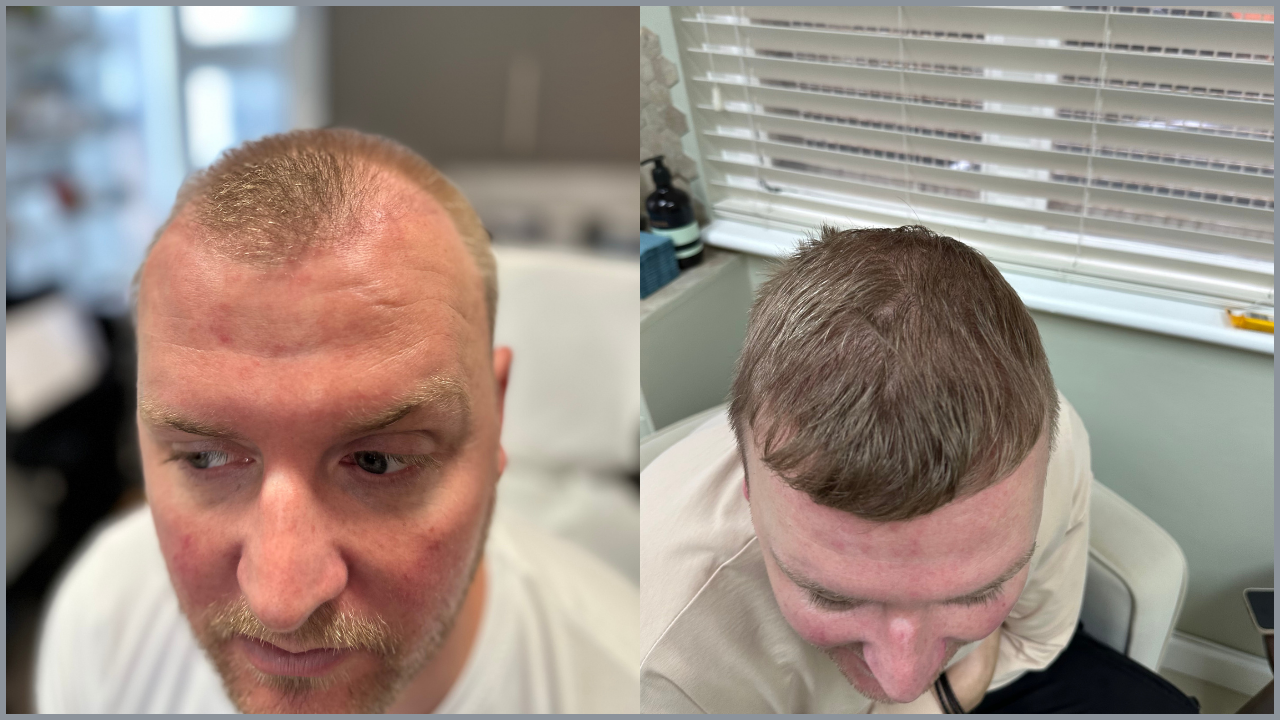


When does hair fall out during chemotherapy — and how quickly?
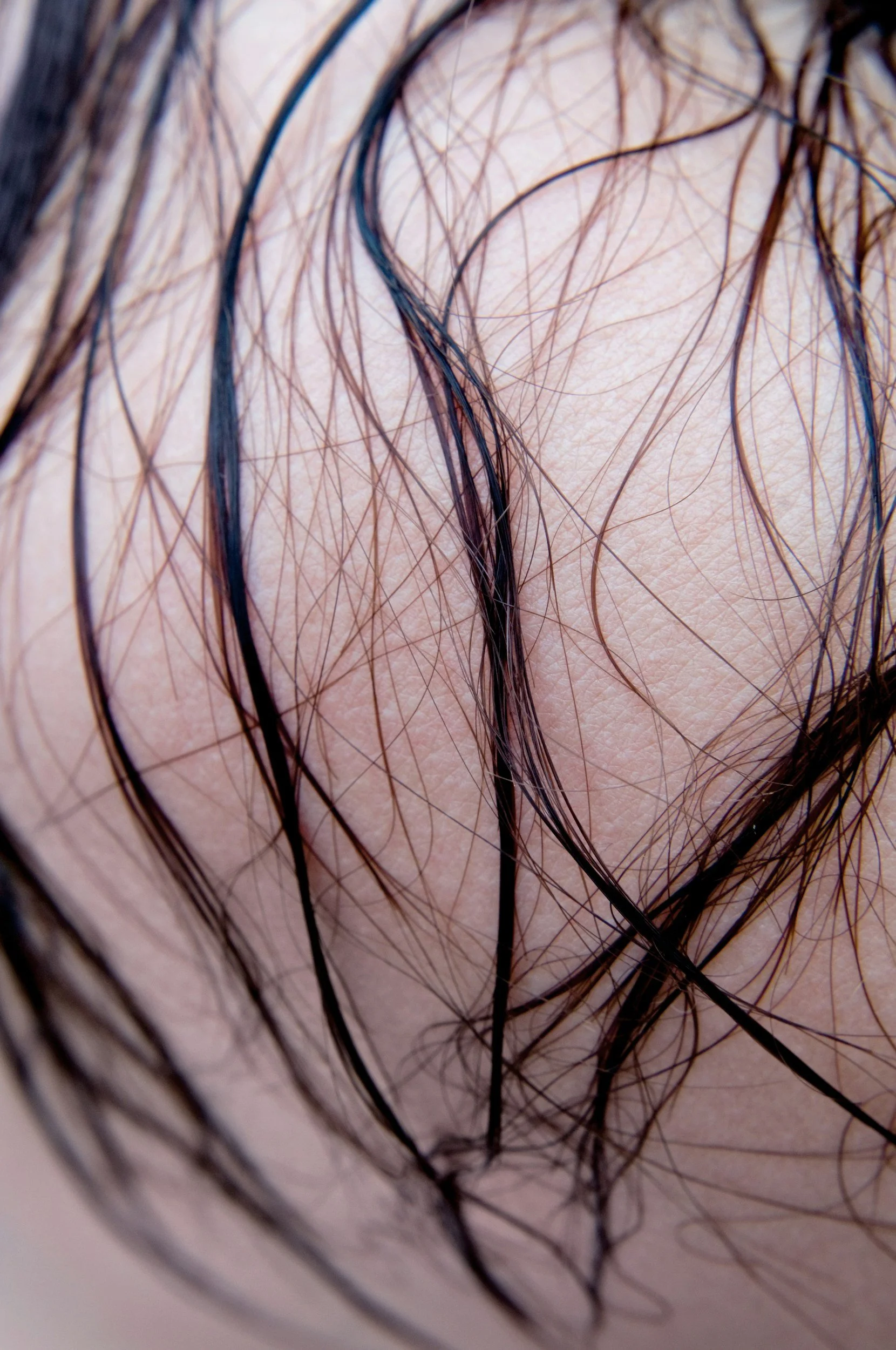
For most people, shedding begins two to four weeks after the first cycle of chemotherapy. It rarely happens all at once — it typically starts with increased shedding in the shower or on the pillow, then accelerates. For some people the loss is gradual over several weeks; for others it can feel very sudden, which can be one of the most shocking parts of the experience even when you were expecting it.
The reason scalp hair is so dramatically affected comes down to the growth cycle. At any given time, up to 90% of the hair on your scalp is in an active growth phase — which makes it highly vulnerable to chemotherapy drugs that target dividing cells. Body hair is different. On the legs or arms, for example, only around 20% of hairs may be actively growing at once. This is why body hair loss, if it happens at all, tends to come later and may be less complete than scalp hair loss.
How does chemotherapy hair loss feel different to other hair loss?
Most types of hair loss are gradual — a slow increase in shedding, a widening parting, a ponytail that feels thinner over months or years. Chemotherapy hair loss is different. It's rapid, it's total in many cases, and it happens to someone who is already going through one of the most physically and emotionally demanding experiences of their life. That context matters.
There can also be physical sensations that other types of hair loss don't involve. Scalp tenderness or sensitivity in the days before and during shedding is common, and for some people quite uncomfortable. I noticed it myself — a strange prickling sensation, as though each individual hair had become a needle, uncomfortable every time my hair moved. A few days later, the shedding began. Knowing that this sensation can be a signal that loss is imminent means it's one less thing to be frightened by when it happens. It's the follicle responding to the sudden disruption of the growth cycle, and it's completely normal — even if nobody warned you it was coming.
When does hair grow back after chemotherapy?
For most people, regrowth begins within four to six weeks of completing chemotherapy, though it can take longer depending on the drugs used and how the body recovers. The first growth is often soft and fine — sometimes with a different texture or wave than the hair you had before. This is normal, and for many people the texture gradually returns closer to what it was over the following months.
It's worth knowing that regrowth doesn't always wait until treatment is completely finished. For people on split regimens — for example, anthracyclines followed by taxanes, which is common in breast cancer treatment — hair may begin to regrow between phases. I experienced this myself. Having cold capped throughout, I had significant hair loss during the anthracycline phase, but by the time I moved on to taxanes my hair had actually started coming back — because scalp cooling tends to be more effective with taxanes than with anthracyclines. So if you're mid-treatment and noticing some regrowth, that can be completely normal depending on where you are in your regimen.
However, regrowth is not guaranteed for everyone. Permanent chemotherapy-induced alopecia is a real and underreported outcome, particularly with certain taxane-based regimens when scalp cooling hasn't been used. If hair hasn't begun to return six months after treatment has ended, or if regrowth feels significantly thinner or patchier than expected, that's the point at which a trichology assessment becomes important. There is a difference between hair that is taking its time and hair that needs clinical support — and the sooner that distinction is made, the more options are available.
When should I see a trichologist about chemotherapy hair loss?
Traditionally, most people don't see a trichologist before chemotherapy, during it, or even in the months that follow. They find their way here later — often when hair hasn't come back as expected, or when regrowth has stalled and they don't know why. I understand that completely, because I was one of those people. Going through chemotherapy myself, there are things I now know that I wished I'd known before my first cycle.
That experience is why I now offer a dedicated support service for people facing chemotherapy. Whether you're preparing for treatment, currently going through it, or in the recovery phase, there is a great deal that can be done. Before treatment, I can advise on scalp cooling, what to expect from your specific regimen, and how to prepare your hair and scalp in advance. During chemotherapy, there are practical steps that can make a real difference to the outcome. And afterwards, targeted nutritional support, the right timing for intervention, and knowing what to watch for can significantly improve your chances of strong, healthy regrowth.
You don't need to navigate this alone, and you don't need to wait until something feels wrong enough to justify getting help. If you're facing chemotherapy and your hair matters to you, getting the right advice early is one of the most useful things you can do.
Frequently Asked Questions
Can I do anything to prevent chemotherapy hair loss?
Scalp cooling (cold capping) is currently the most evidence-based option for reducing hair loss during chemotherapy. It isn't suitable for every regimen or every person, and it works better with some drugs than others — but for those it is suitable for, it can make a real difference to how much hair you keep. I'll be covering this in detail in next week's blog, so do come back for that one.
Will my hair grow back the same as before?
Often broadly similar, but not always identical — and that's something worth knowing going in rather than being surprised by afterwards. Texture, curl and density can all shift, particularly in the months immediately after treatment. For most people things settle over time. If they don't, or if regrowth feels much thinner or slower than you'd expect, it's worth getting it properly assessed rather than just waiting and hoping.
Should I shave my head when hair starts falling out?
This is entirely your choice, and there's no right answer. Many people find that taking control of the timing — rather than watching their hair come out gradually over days or weeks — helps them feel less powerless in a situation where so much feels out of their hands. Others prefer to let it happen in its own time. Do what feels right for you.
Is it normal to feel emotional about losing your hair during chemotherapy?
Of course. Hair is one of the most deeply personal parts of how we present ourselves to the world — tied to our identity, our femininity, how we recognise ourselves in the mirror. For many people going through cancer treatment, the hair loss is the hardest part. Not because it's more important than getting well, but because it's the thing that makes you look ill when the rest of the time you might feel almost normal. It announces your diagnosis to every room you walk into before you've said a word. And it isn't just the hair on your head — losing your eyelashes, your eyebrows, your body hair, all at once, is a profound change. I know this from my own experience. Grieving that loss isn't vanity. It's a completely valid response to something that has been taken from you without your choice.
Do I need a GP referral to see a trichologist about chemotherapy hair loss?
No — you can book directly, at any stage. Before treatment, during it, or afterwards. You don't need to wait until things feel bad enough to justify it. If you're going through this and you want support, that's enough.
Going through chemotherapy and worried about your hair?
You don't have to figure this out alone. Whether you're preparing for treatment, currently going through it, or wondering why your hair hasn't come back the way you expected — I'm here, and I understand this from both sides of the consultation chair.
Book a consultation with Ruth Collis AIT, Consultant Trichologist & PRP Hair Loss Expert. No referral needed.
📍 Haywards Heath, West Sussex | ruthcollistrichology.co.uk/appointment
Ruth Collis AIT is a Consultant Trichologist and PRP Hair Loss Expert based in Haywards Heath, West Sussex. She is a member of the Institute of Trichologists and listed on the PSA Accredited Register. Ruth sees patients from across Mid Sussex, Brighton, Crawley, and beyond.
