Perimenopause Hair Loss and Thinning: What's Actually Happening and What Helps
Contents
Perimenopause hair loss affects more women than most people realise. A poll of nearly 6,000 women by leading menopause specialist Dr Louise Newson found that 50% noticed their hair thinning and 39% experienced significant hair loss during the menopausal transition.
If you're in your forties or fifties and you've noticed your hair thinning, losing its texture, or simply feeling like less of itself, and you've been told it's just the menopause, I want to offer you something more useful than that. Perimenopause hair thinning is real, it is common, and it is one of the most emotionally loaded symptoms of this life stage precisely because it arrives alongside so many other changes at once. But it is not simple, it is not inevitable, and it is not something you have to accept without question.
Today I want to explain what is actually happening, to your hormones, your hair follicles, and your body as a whole, and why understanding the full picture is the first step towards doing something meaningful about it. I'm Ruth Collis, Consultant Trichologist based in Haywards Heath, and this is one of the most complex and rewarding areas of my clinical work.
Why perimenopause hair loss happens: it's not just your hormones
This is the most important thing I want you to understand about perimenopause hair loss, and it's the thing that gets left out of almost every article on the subject. Yes, the drop in oestrogen matters. But oestrogen doesn't just affect the hair follicle directly. It sets off a cascade of changes throughout the body, and it's often those downstream effects that do the most damage to the hair.
Oestrogen plays a critical role in the hair growth cycle. It supports the growth phase, and it counteracts the androgens, male hormones, that are present in every woman's body and that, left unchecked, can cause follicles to miniaturise over time. As oestrogen declines, that counterbalancing effect weakens. Androgens become relatively more dominant. The hair follicle responds.
But here's what doesn't get talked about enough. During perimenopause, progesterone often drops before oestrogen does, and low progesterone can cause heavier, more prolonged periods. Heavier periods deplete iron and ferritin. Low ferritin is one of the most significant and most commonly missed contributors to hair loss. So even before oestrogen has meaningfully declined, the hormonal shift of perimenopause may already be affecting your hair through a completely different mechanism, one that a basic blood test from a GP might not even pick up.
The gut, the microbiome, and your oestrogen levels
This is where things get genuinely fascinating, and where the science is moving faster than most people realise. Inside your gut is a collection of bacteria with a specific job: helping your body metabolise and recirculate oestrogen. This is known as the estrobolome, and it plays a meaningful role in regulating how much oestrogen is available to your tissues at any given time.
As oestrogen levels decline during the menopausal transition, gut microbiome diversity also tends to decline, and the two processes interact with each other. A less diverse estrobolome has a reduced capacity to support oestrogen recirculation, which compounds the effects of falling ovarian oestrogen. And when the gut microbiome is disrupted, by poor sleep, a diet low in fibre, stress, or antibiotics, oestrogen metabolism becomes less efficient, and androgen activity can increase as a result.
This is one of the reasons I look at gut health as part of a full hair loss assessment in perimenopausal and postmenopausal women. It is not separate from what's happening to your hair. It is part of the same picture.


How to stop hair falling out during perimenopause: the behavioural cascade nobody mentions
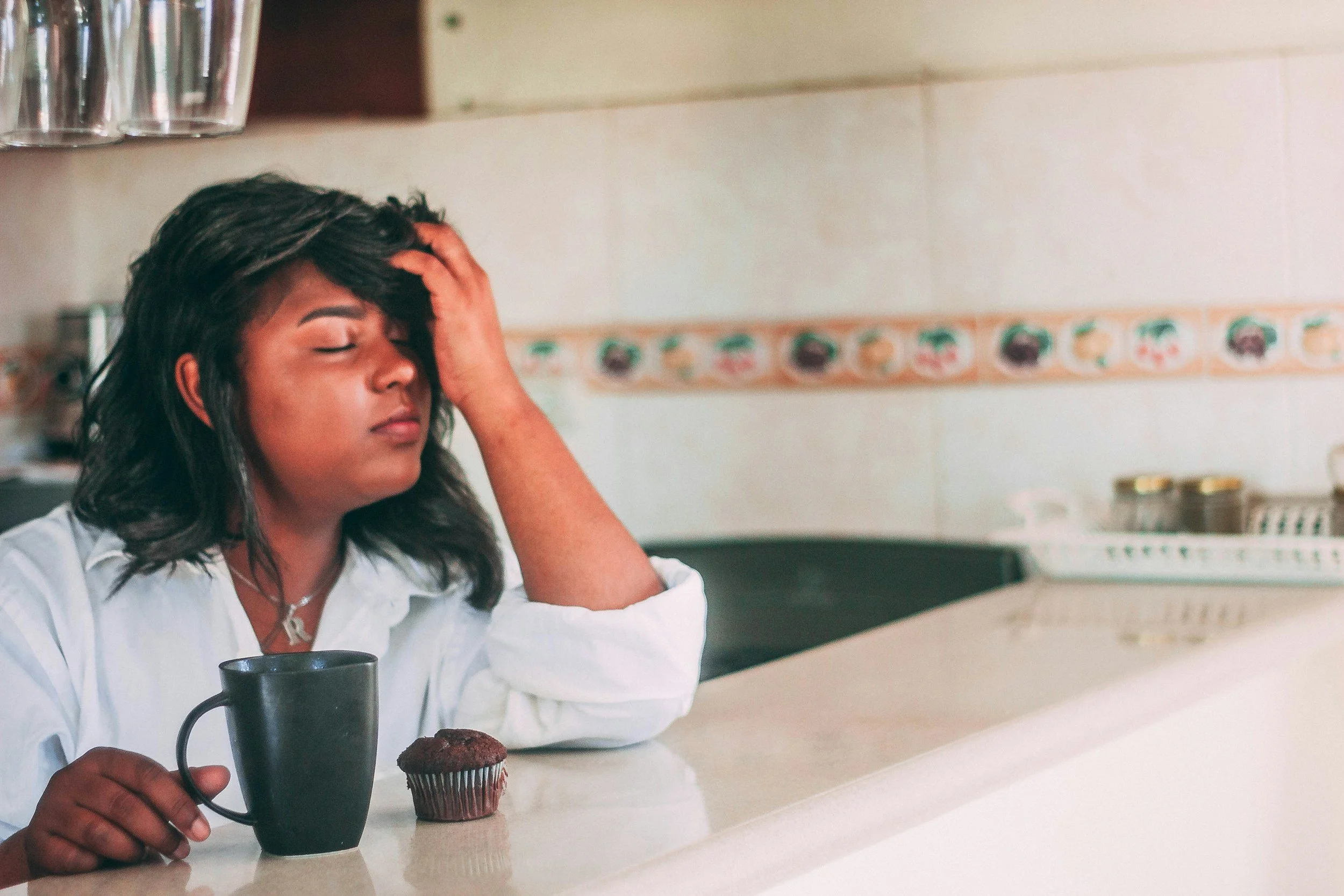
Hot flushes get talked about. Mood changes get talked about. What gets talked about far less is the chain reaction that follows from one of the most common and disruptive perimenopause symptoms: poor sleep.
When you're waking repeatedly through the night with night sweats, the consequences ripple outward. You reach for more caffeine. You grab food on the go rather than eating properly. Exercise feels impossible when you're running on empty. And when all of those things compound over weeks and months, the internal environment your hair follicles depend on, adequate nutrition, balanced blood sugar, manageable stress, restorative sleep, becomes increasingly hostile to healthy hair growth.
This is not a character failing. It is biology. But it does mean that perimenopause hair loss is very rarely just about the hormones themselves. The hormones created the conditions, and the conditions created the rest. This is why I look at the whole person, not just the scalp, and why addressing hair loss in this life stage requires more than a single solution.
What your body is trying to do, and why it isn't enough
Here's something that surprises most people: after menopause, your body doesn't simply stop producing oestrogen. It tries to compensate. Fat cells contain an enzyme called aromatase, which converts androgens into oestrogen, and after menopause, adipose tissue becomes the body's primary source of oestrogen production, potentially accounting for almost all circulating oestrogen in postmenopausal women. The capacity of fat tissue to do this actually increases with age around the time of menopause.
This may go some way to explaining why the body tends to accumulate more fat in the postmenopausal years, particularly around the middle. It is, in part, a biological attempt to maintain oestrogen levels through an alternative route.
The difficulty is that it isn't enough. The oestrogen produced this way cannot compensate for what the ovaries were producing. And the type of oestrogen generated, predominantly oestrone rather than the more potent oestradiol, is less effective at the follicle level. So while the body is genuinely trying to adapt, the hair follicle is still working with significantly less than it needs.
This also helps explain something women often notice happening simultaneously: the skin losing firmness, muscle becoming harder to maintain, weight redistributing around the abdomen. These are all connected. The same hormonal shift that is affecting your hair is affecting your body composition, your skin, your muscle mass, and your metabolism, all at once. When perimenopause hair loss arrives in this context, it doesn't arrive alone. And that is precisely why it can feel so destabilising.
Perimenopause hair texture change: why your hair feels different and what happens next
One of the least talked-about aspects of perimenopause hair thinning is what happens to the texture and character of the hair itself. As follicles miniaturise and the hormonal environment shifts, many women find that the new hair coming through is finer, lighter, and, because it carries less weight, curlier or wavier than before. Hair that was always straight may suddenly feel unruly. Hair that had a natural wave may become difficult to manage in a completely new way.
The response, understandably, is to reach for the straightener or the blow dryer more often. And this is where a second layer of damage begins, not at the root, but along the length and ends of the hair shaft. The hair is already under pressure from the follicle upwards. When heat styling increases on top of that, the structural integrity of the existing hair deteriorates faster than it can be replaced. I see this regularly in clinic: the loss from the root is progressing at one rate, and the mechanical and heat damage is progressing at another, and together, they accelerate the overall picture considerably faster than either would alone.
This is not said to alarm you, and it is absolutely not said to make you feel you've done something wrong. It's said because understanding it changes what you do next.
The weight of it all, and why this life stage hits so hard
I want to say something that doesn't often make it into clinical blog posts: the women I see at this life stage are frequently doing an extraordinary amount. They are raising teenagers, supporting ageing parents, running businesses or working full time, managing households, and trying to hold everything together for everyone around them, often whilst running on very little sleep and putting their own needs last on a very long list.
Perimenopause hair loss in this context doesn't just arrive as a physical symptom. It arrives as one more change in a body that already feels unfamiliar. The firmness in the skin, the shift in weight distribution, the muscle that's harder to maintain, and now this. So much of how women experience their identity, their vitality, and yes, their femininity, is quietly tied to their hair. Losing it, even gradually, even partially, touches something deeper than aesthetics.
I say this not to be bleak, but because I think it matters that someone names it. And because there is a genuinely positive side to this that I want to be equally clear about.
The earlier this is addressed, the better the outcome. Female pattern hair loss, even when it has been accelerated and complicated by everything the menopausal transition brings with it, very rarely progresses to complete baldness. There is almost always something to work with. And the things that support your hair in this life stage are the same things that support your body, your energy, your sleep, and your long-term health more broadly. This is not a battle on two fronts. Addressing one helps the other.
What about HRT?
This is one of the questions I'm asked most often, and I want to answer it honestly rather than simply. HRT can help with perimenopause hair loss, oestrogen supports the hair growth cycle, and restoring some of that oestrogen can have a positive effect on the follicle. For many women it is an important part of the picture.
But it is not straightforward for everyone, and there are nuances worth knowing. Starting HRT involves a hormonal shift in itself, and any significant hormonal change can temporarily disrupt the hair growth cycle, sometimes causing a short-term increase in shedding before things settle. This catches many women off guard, particularly those who started HRT partly in the hope of helping their hair.
The specific formulation of HRT also matters. Some women find the addition of testosterone beneficial for hair and energy. Others find it has the opposite effect, because testosterone, in some individuals, converts to DHT, which is one of the primary androgens implicated in follicle miniaturisation. This is highly individual, and it is one of the reasons a blanket recommendation is not possible.
What I would say clearly is this: if you have started HRT and noticed a change in your hair, in either direction, that is worth investigating properly rather than waiting to see what happens. And if you are considering HRT and perimenopause hair thinning is part of your picture, it is worth having a trichology assessment alongside your menopause consultation, so that both conversations are informed by the full picture.
When to book a consultation
If you are in perimenopause or postmenopause and your hair has changed, in volume, texture, density, or rate of loss, please don't put this at the bottom of the list. I know how long that list is. But perimenopause hair loss responds best to early intervention, and the longer it goes without proper assessment, the more complex the picture tends to become.
I see patients from my clinic at 143a South Road, Haywards Heath RH16 4LY, across Mid Sussex and West Sussex. A first consultation includes a full scalp analysis, a detailed clinical history that takes in your hormonal background, your health, your lifestyle, and everything that might be relevant, and a clear, honest explanation of what I believe is happening and what your realistic options are.
You deserve to understand what's happening to your body. This is where that starts.
Frequently Asked Questions
Can perimenopause hair thinning be reversed?
Female pattern hair loss, even when accelerated by the menopausal transition, very rarely progresses to complete baldness, and recovery is genuinely possible in many cases. The key factors are how early it is addressed, whether any underlying contributing causes are identified and treated, and a whole-person approach to your health. The earlier you seek help, the better the outcome tends to be.
How do I keep my hair from falling out during perimenopause?
There is no single answer, because perimenopause hair loss is rarely caused by just one thing. What I can say is that the internal environment matters enormously: nutrition, sleep, stress, and hormonal balance all affect the hair cycle. Getting a proper clinical assessment is the most important first step, because treating a cause you haven't correctly identified rarely works.
How can I thicken my hair during perimenopause?
Again, this depends entirely on what is driving the thinning. For some women, addressing nutritional deficiencies makes a significant difference. For others, hormonal support is part of the picture. For many, it is a combination of several things addressed together. A trichology assessment gives you a clear, personalised answer rather than a generic one.
How to tell if hair thinning is hormonal
Hormonal hair thinning during perimenopause tends to present as diffuse thinning across the crown and a widening parting, often gradual rather than sudden. It may be accompanied by other perimenopause symptoms such as irregular periods, sleep disruption, or mood changes. However, these patterns can overlap with other causes, which is why proper clinical assessment matters. Blood tests, scalp analysis, and a detailed history are all needed to give an accurate answer.
Does everyone lose hair during menopause?
Not every woman experiences significant perimenopause hair loss, but changes to hair density, texture, and growth rate are extremely common during this life stage. Research from leading menopause clinician Dr Louise Newson, involving nearly 6,000 women, found that 50% noticed their hair thinning and 39% experienced hair loss during the menopausal transition. The degree varies enormously between individuals, which is exactly why a personal assessment is more useful than a general answer.
Why is my hair changing texture as well as thinning?
Perimenopause hair texture change is a recognised and frequently overlooked symptom of hormonal hair loss. As follicles respond to shifting hormone levels, new hair often comes through finer and lighter, and with less weight to it, it can behave very differently to the hair you're used to. This is worth discussing in a consultation.
Can HRT help with perimenopause hair loss?
It can, but it is not a simple yes for everyone. HRT formulation, individual hormone response, and whether there is an underlying genetic component to your hair loss all affect the outcome. A trichology assessment alongside your menopause care gives you the clearest picture of what to expect.
Why is my hair loss getting worse even though I've started HRT?
Starting HRT involves a hormonal adjustment that can temporarily disrupt the hair growth cycle. This is not uncommon and does not necessarily mean the HRT is making things worse in the long term, but it is something worth having assessed properly rather than waiting on.
A note on this blog
Hair loss during perimenopause and menopause is one of the areas I feel most strongly about, because it sits at the intersection of biology, identity, and a life stage where women are so often not properly heard. If anything here has resonated, my door is open.
Ruth Collis AIT, Consultant Trichologist
143a South Road, Haywards Heath RH16 4LY
Ruth Collis AIT
Consultant Trichologist & PRP Hair Loss Expert
Haywards Heath, West Sussex
